
/6 min read
Lighting a Landed House
In short
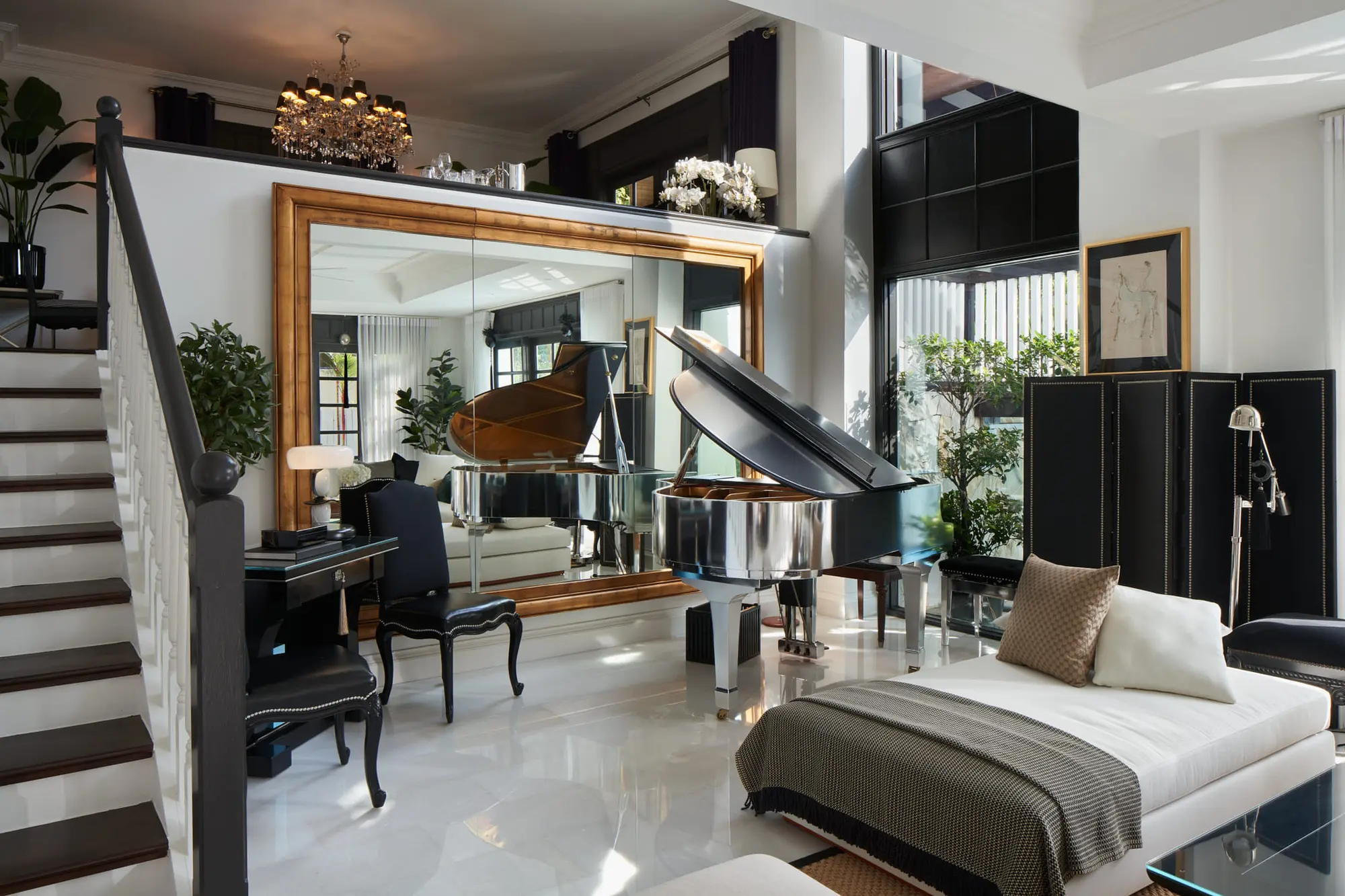
Why most houses are lit for the photograph rather than for the evening, and what a working scheme looks like: three layers — ambient, task and accent — on separate circuits, warm and dimmable at night, cooler and brighter by day, and almost nothing pointing straight down from the middle of the ceiling. The decisive point is timing. Circuits, driver positions and ceiling voids are fixed at first fix, months before a fitting is chosen.
In this article
Topics
- Interiors
- Process
Three layers, separately switched
Ambient light fills the room, task light does the work, accent light gives it depth. Put them on one circuit and you have one setting, which will be the wrong one for most of the day.
Colour temperature at night
A house lit at 4000K in the evening feels like an office. Warmer sources, dimmed, and a scheme that shifts through the day make the difference between a room you sit in and a room you pass through.
Why this happens at first fix
Circuits, driver locations and ceiling voids are all fixed long before fittings are chosen. A lighting scheme decided at fit-out is a lighting scheme constrained by wiring somebody guessed at.
Key takeaways
- Three layers on separate circuits, or you have one setting.
- Warm and dimmable at night. Cooler and brighter by day.
- The scheme is fixed at first fix, not when the fittings are chosen.
On this site
First published in the KAPA Journal, written with KAPA Design Collective, the practice that designs and builds our residences.
Published by TMB Development at tmbdevelopment.com/journal/lighting-a-landed-house. Quoting a passage with a link back is welcome; republishing it is not — see the terms.